Introducing the Ditto Fire OS Receiver
The new Ditto Fire OS Receiver brings wireless screen mirroring, digital signage and emergency alerts to Fire OS devices. It joins Windows, Apple TV...

2 min read
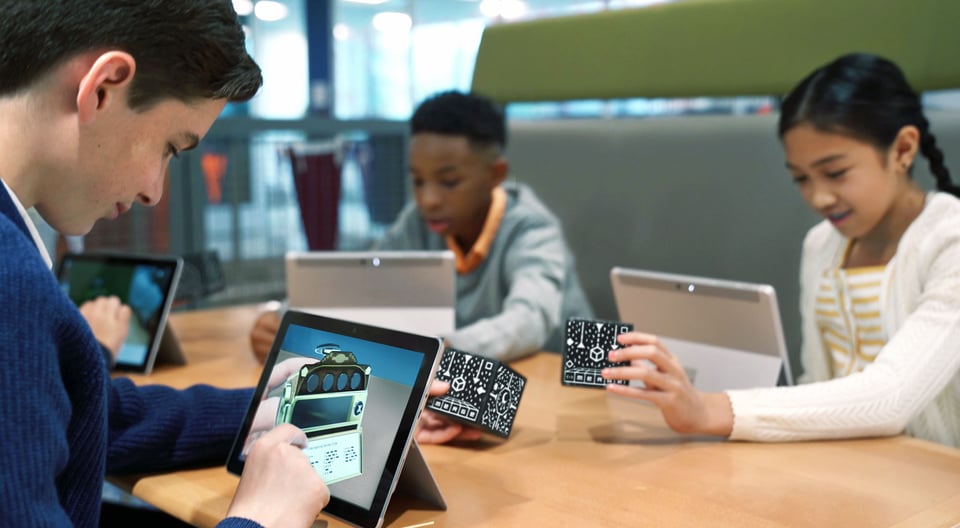
Welcome to part three of a bite-sized series about tools and techniques educators use to teach augmented reality (AR) and virtual reality (VR) in the classroom. Read part two here.
Merge Cube is an inventive and tactile way to learn with augmented reality (AR) in the classroom. It’s an effective tool because it’s a physical, tangible object that springs to life as a hologram when viewed through your phone or tablet. Bring the water cycle, ocean ecosystems, archeological digs and more to the palm of your hand.
The Merge Cube is a dense foam cube with a patterned design. When viewed through your device’s camera with any of Merge’s apps, the Cube transforms into a digital hologram, displaying objects, environments and diagrams in virtual 3D space.
You can rotate the cube and your device to see the virtual environment your Merge Cube creates in 360 degrees.
Similar to Google Expeditions, Merge Explorer is the Merge content library app. Merge Explorer has a vast catalog of VR and AR experiences, environments, objects and other interactive content. Divided into topical categories, Merge Explorer helps students investigate science, engineering, art, math and other subjects using the Merge Cube as a visual guide.
Step 1
Have your Merge Cube handy.
Step 2
Open the Merge Explorer app and select your preferred experience.
Step 3
Tap the play icon and point your device at the Merge Cube.
Step 4
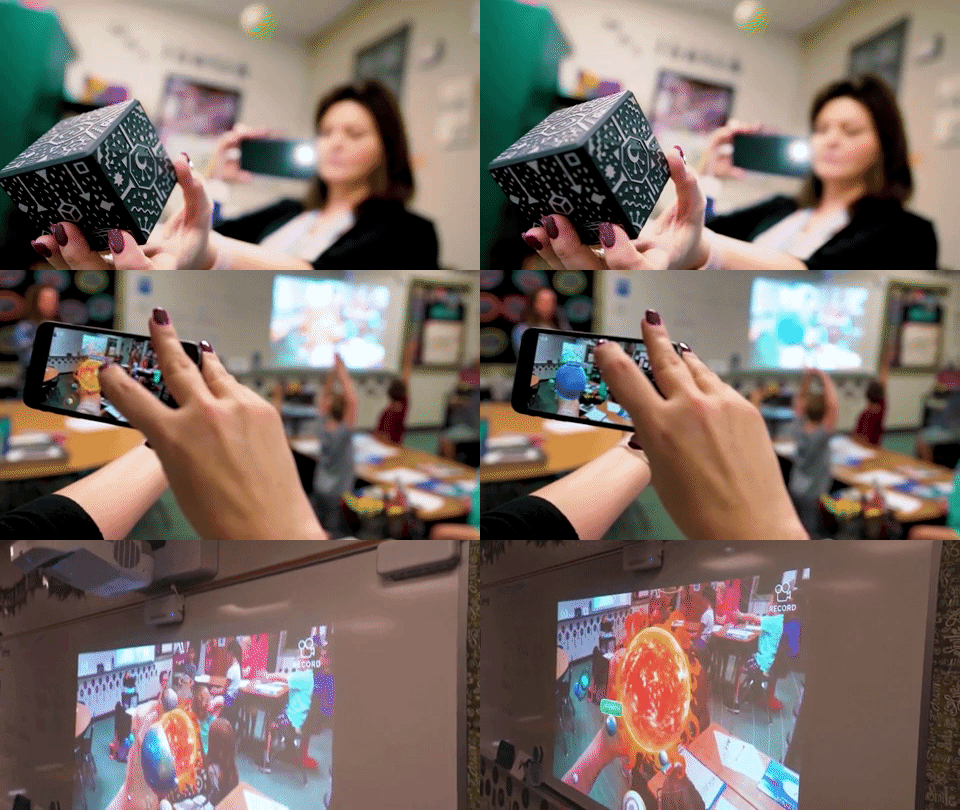
The Merge Cube will now render as a 3D augmented reality object through your device’s camera. You can move and rotate the Cube to explore all sides of its contents.
Step 5
Tap the Next button to see your Merge Cube render additional content. The example in this video shows the different states of the water cycle.
If you need an easy way to share what’s on your phone screen to the whole class — like in the video — read part one in this series to learn how to screen mirror with Reflector Teacher.
Stay tuned for part four!
This blog series is created by Alpha Squirrel Christine Danhoff. An Ohio-based educator and member of the Alpha Squirrel program, Christine is an ambassador for Squirrels and is an expert on developing creative ways to educate students and other educators with technology.
The new Ditto Fire OS Receiver brings wireless screen mirroring, digital signage and emergency alerts to Fire OS devices. It joins Windows, Apple TV...
Ditto now runs on Android-powered displays. The new Ditto Android Receiver gives schools and businesses another way to bring wireless screen...
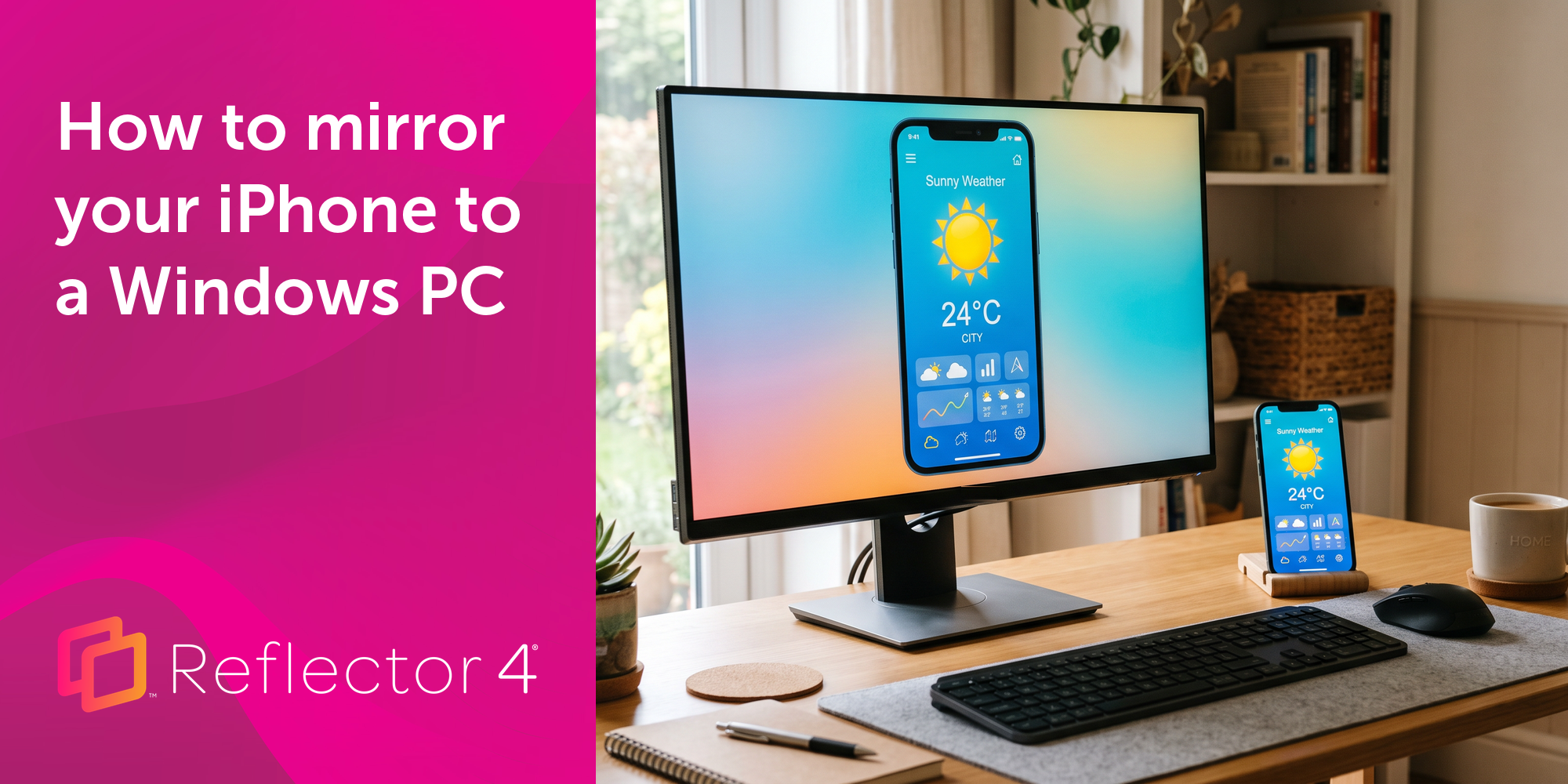
Windows still can't receive AirPlay connections on its own. Try to open Screen Mirroring on an iPhone in a room full of PCs. The list comes back...
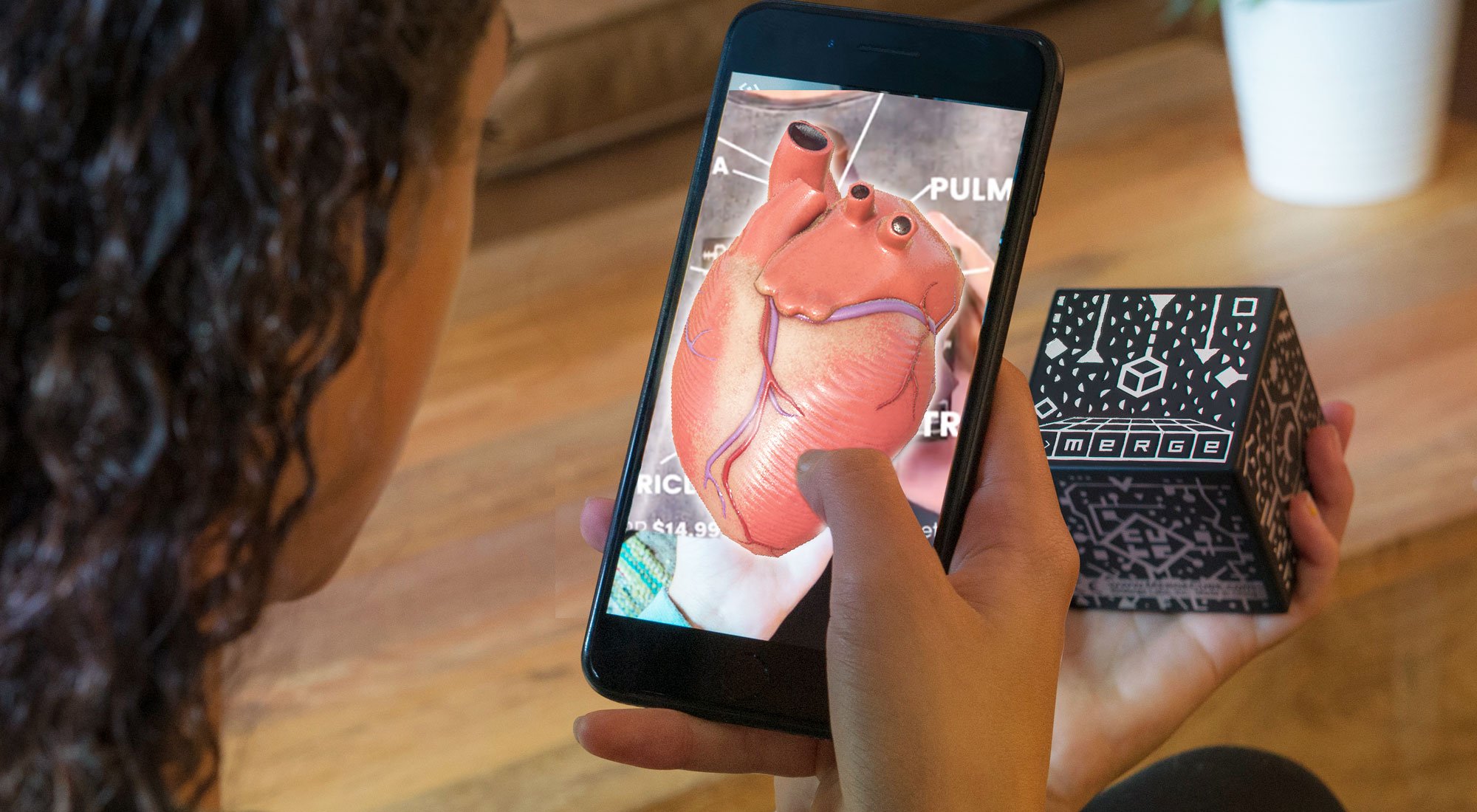
Learn how to use AR and VR remotely for distance learning lessons with Merge Cube and Reflector.
Squirrels Sponsors a Teacher Through redditgifts Gift Exchange
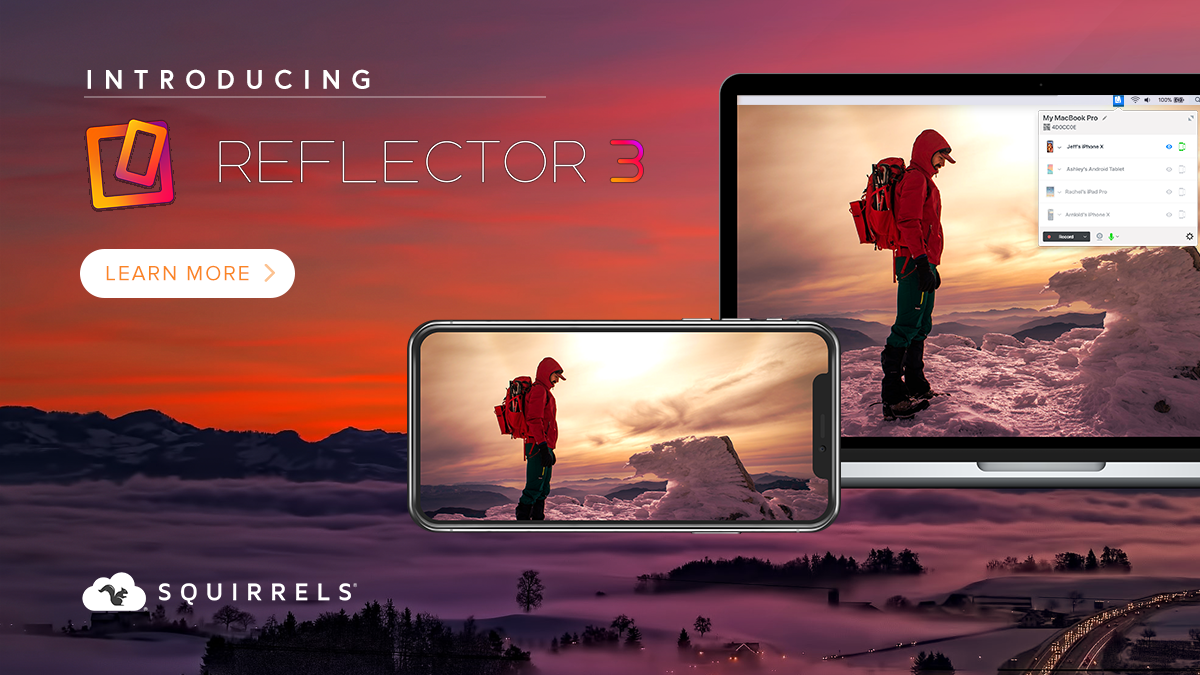
Reflector 3 brings Miracast, a new UI, improved speed and reliabilty and more. Reflector Teacher is built on the same tech and streamlined for...
Mirror any device to your screen — wirelessly.
One universal license for each app — works on macOS and Windows.
— or buy Reflector 4 on its own —



For schools, districts or volume licensing — contact us.

Stream audio and video from your Mac or PC to any screen.
One universal license for each app — works on macOS and Windows.
— or buy AirParrot 3 on its own —
For schools, districts or volume licensing — contact us.